
Featheredge Fencing in Devon
Exeter gardens are rarely a straight, level box. Terraces in St Thomas step down the hill, plots in Pennsylvania and St James back onto banks, and older boundaries across Heavitree and Alphington have trees and hedges growing right through them. Featheredge is built up one board at a time on site, so it bends to that kind of line in a way that a row of ready made panels can’t.
We’re DTG Trees & Grounds, an ARB Approved tree surgery, grounds and fencing team that works right across Exeter and the villages on its edge. If a tree, a stump or a hedge is the reason your old fence gave up, the same crew can deal with that before any new boards go up. A handful of photos is enough for us to give you an honest view.
Feather edge fencing not quite right for your boundary? Other fence types we put up
What’s in a featheredge fence
The name comes from the boards, which are thicker along one edge and taper towards the other. Fixed upright, each one laps over its neighbour, leaving a solid face with no gaps to see through. Behind them, horizontal rails known as arris rails run from post to post and carry the weight. A gravel board usually runs along the bottom, so the bottom ends of the boards stay clear of wet soil.
You’ll also hear this called closeboard fencing. The two words get used for the same job, so if a neighbour or a builder mentions closeboard, they’re very likely describing what’s on this page. We fit other styles as well, including panels and hit and miss.
Featheredge work in Exeter
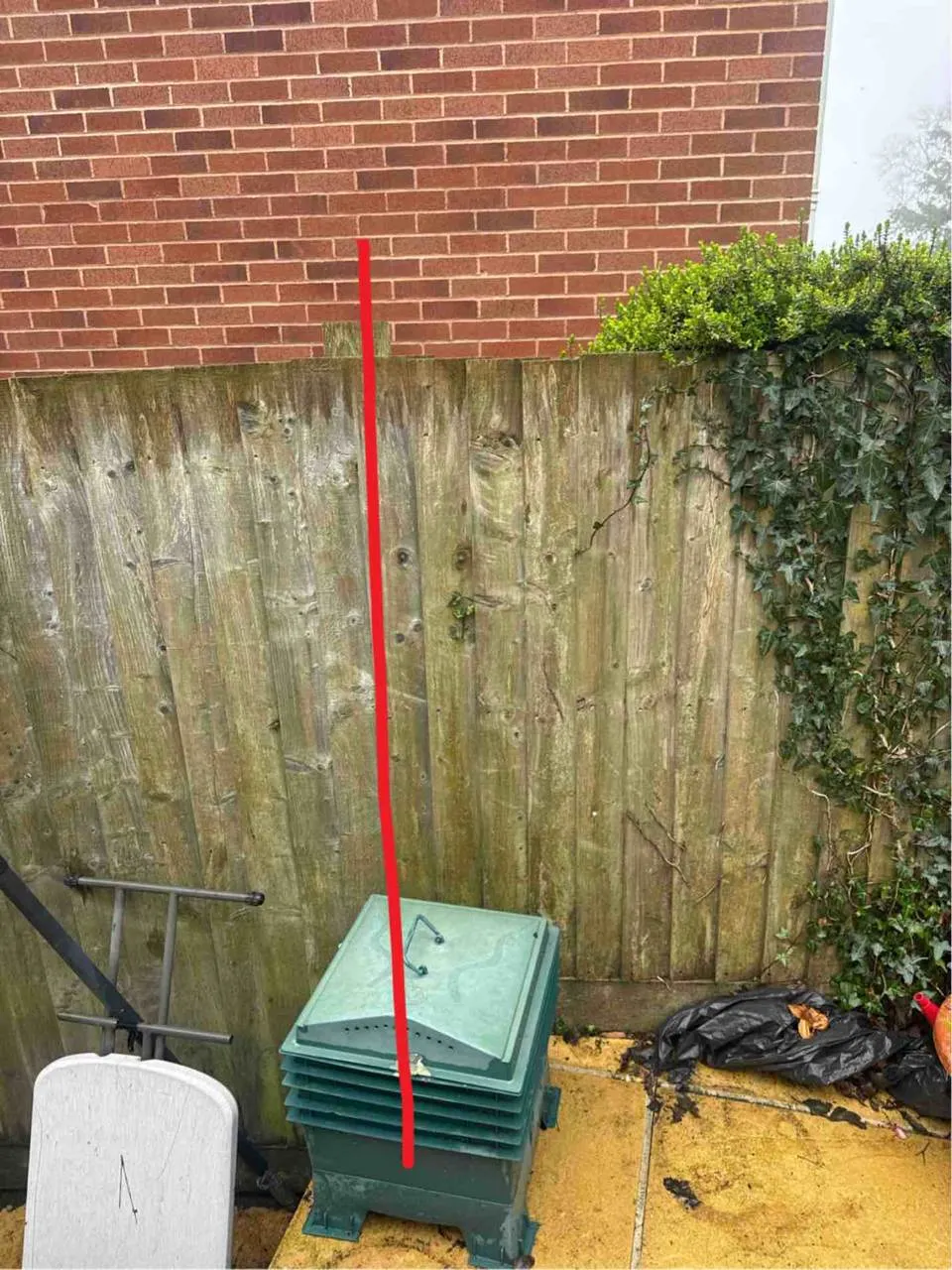
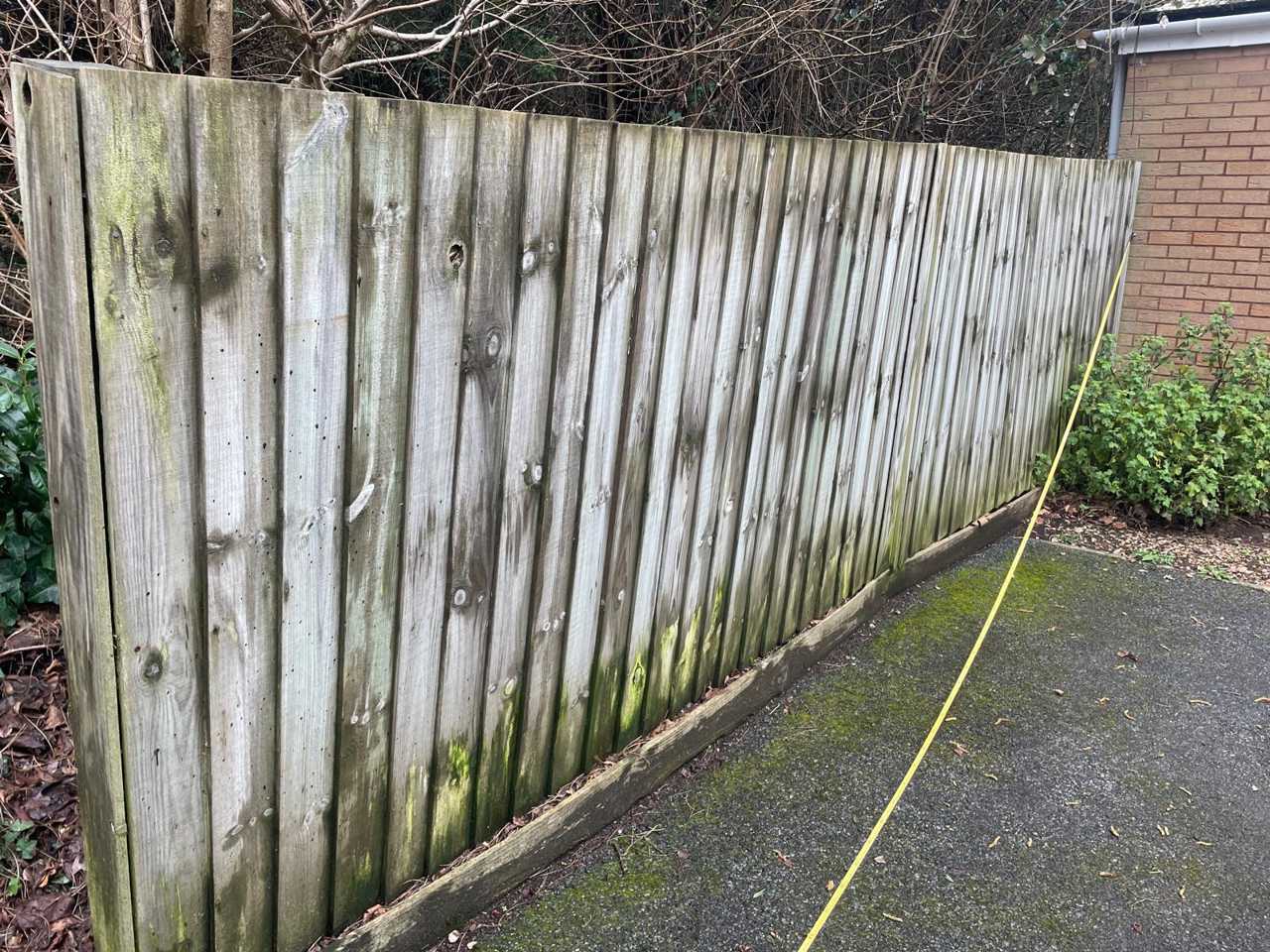
Pictures from our own Exeter jobs, taken on the first visit so you can see what we started with.


Featheredge or panels?
Panels are quicker to put up, and they do the job well on a straight, level run. Featheredge takes longer because it’s built piece by piece, and that’s where the difference lies. Rails can be set to the slope, a run can be cut to any length, and one split board can be swapped out by itself while the rest of the section stays put.
We’ve written a longer comparison, with posts included, in our guide to choosing the right fence. If you’re still unsure after reading it, share some pictures of the boundary and we’ll tell you which we’d pick for that spot, and why.
Choosing your posts: timber or concrete
We price featheredge with either. Timber keeps the whole fence looking of a piece, which many people prefer in a cottage garden or against a planted border. Concrete suits anyone who’d rather never think about a rotten post again, though it’s heavier work to install and has a more utilitarian look. Neither is the right answer everywhere. Ground conditions, how exposed the boundary is and how many more years you’ll be in the house all come into it.
It’s also worth deciding which way the fence should face. Most featheredge has a board side and a rail side, and we can quote for a single or double-sided fence if you’d like it to look tidy from both gardens.
When a tree or hedge is on the line
This is where being a tree and grounds firm helps. A replacement fence often exposes the real reason the old one failed, whether that’s a trunk that has grown into the rails, a stump exactly where a post needs to go, or a hedge that has pushed the whole lot sideways. Our teams can take down, cut back or remove what’s in the way within one plan, so you aren’t left coordinating two firms around one boundary.
Roots need more thought. Post holes close to a good tree can sever them, so we may move a post or adjust the spacing to keep clear of larger ones. There’s a legal side too:
- Tree Preservation Orders. Government guidance says that cutting the roots of a protected tree is a prohibited activity that needs the council’s consent, along with felling, lopping and topping.
- Conservation areas. Trees there generally need six weeks’ written notice to the council before certain work goes ahead. Removing an existing fence in a conservation area might need permission as well, so get that checked before any boards are lifted.
- Nesting birds. If birds are nesting in a hedge along the line, cutting it back may have to wait, and that can affect when the fence goes in.
If the site might be affected, tell us early. We can help with the paperwork for protected trees, and there’s more on our tree applications page.
Recent featheredge jobs around Exeter
Two jobs from our own records give a feel for the work:
- St James, Exeter: more than 28 metres of new featheredge in two runs. The 17 metre run starts at six foot and tapers to five foot along its length, and the second run is 11.2 metres at five foot. Every bit of the old fence came out and went away with us.
- Marsh Barton, Exeter: a six metre stretch of featheredge behind a property had given way. We took it out and put in a new 1.8 metre run on the same line.
Sloping gardens, old walls and hard ground all turn up in Exeter. If the fence will be fixed to a wall or a base that’s seen better days, we’ll say so before the work starts, since new boards won’t stay straight on a weak footing.
Height limits and permission
Under the national rules on the Planning Portal, you can usually build as high as two metres from ground level without applying for planning permission. Beside a highway that carries vehicles, or the footway alongside it, that drops to one metre. The height counts up from ground level, so a fence sitting on a low wall includes the wall.
You’ll need to apply if the property is listed, or shares a boundary with one that is, or if a planning condition or an article 4 direction has taken those rights away. A fence that’s already over the limit can’t be made taller without permission either. If you’re anywhere near those lines, speak to the planners at your local council first, and we’ll flag anything that stands out when we visit.
Agree the boundary first
Before any quote turns into a date, it’s worth being sure who owns the fence and exactly where the line runs. Your title deeds or the Land Registry are the place to start if you’re unsure, and a quick word with the neighbours saves a lot of trouble on the day, especially if we’ll need access from their side. We’ll also ask you about any underground services along the line, because our crew will be digging post holes through it.
For homes, schools and commercial sites
We fit featheredge for homeowners, and we also take on fencing for businesses, care settings and schools. Where a site is in daily use, we’ll talk through access and timing with whoever runs it. Our trading terms include a 12-month workmanship warranty on fencing.
Common questions
What’s the tallest featheredge you can put up?
Six foot, or about two metres, is the usual top end without a planning application, counted from ground level. Roadside boundaries have a lower limit. For anything taller, we’d want the planning position clear before pricing.
What happens to the existing fence?
We can include taking it out and clearing it in the quote. Tell us when you enquire, and mention if there’s old concrete around the posts, as that affects the work involved.
Does the Party Wall Act apply to a new fence?
Government guidance on the Act says wooden fences aren’t included, though garden walls that sit astride a boundary can be. If your fence involves work to a shared wall, get advice before anything starts.
Can a gate go in the same line?
Yes. Pedestrian and driveway gates can be matched to the new fence, and it’s simplest to plan one in from the start.
Do you deal with the tree as well, or just the fence?
Both, if you want us to, so you’ve got one firm to talk to. We’ll let you know if consent is likely to be needed before the tree work can go ahead.
Show us the boundary
Give us an idea of the length, attach two or three pictures, and say whether there are any trees or hedges along the way. We’ll reply with what we’d suggest and arrange a visit if it’s needed. You can contact us here.
More from DTG near you
All our fencing: Panel fencing · Hit and miss fencing · Stock and field fencing · Fence repairs · Fencing overview
Trees and hedges on the line: Tree surgery · Hedge trimming · Stump grinding · Tree applications
Near you in Exeter: Tree Surgeon Exeter · Hedge Cutting Exeter · Stump Grinding Exeter · Garden Maintenance Exeter