
Fence Repairs in Devon
A fence usually goes one post at a time. The post rots off at the ground, the sections either side start to lean, and a windy night finishes it. Get to it at that first post and the fix is quick. Leave it another winter and you could be replacing the whole run.
DTG Trees & Grounds repairs fences all over Exeter, from Pinhoe and Whipton to Alphington and Marsh Barton. Plenty of the damage we see is down to a tree or hedge: a branch dropped in a storm, roots lifting a post, ivy dragging a section over. Because we’re tree surgeons too, we can deal with what caused it and fix the fence on the same visit.
Past repairing? Other fence types we put up
Fence repairs in Marsh Barton, Exeter
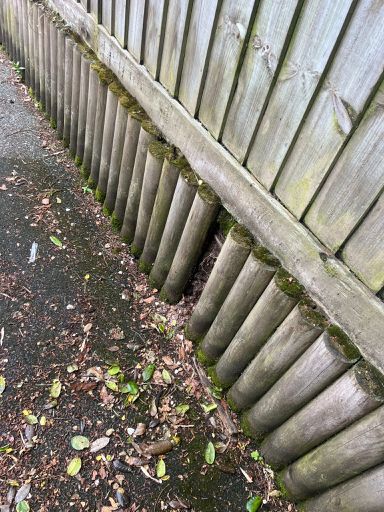
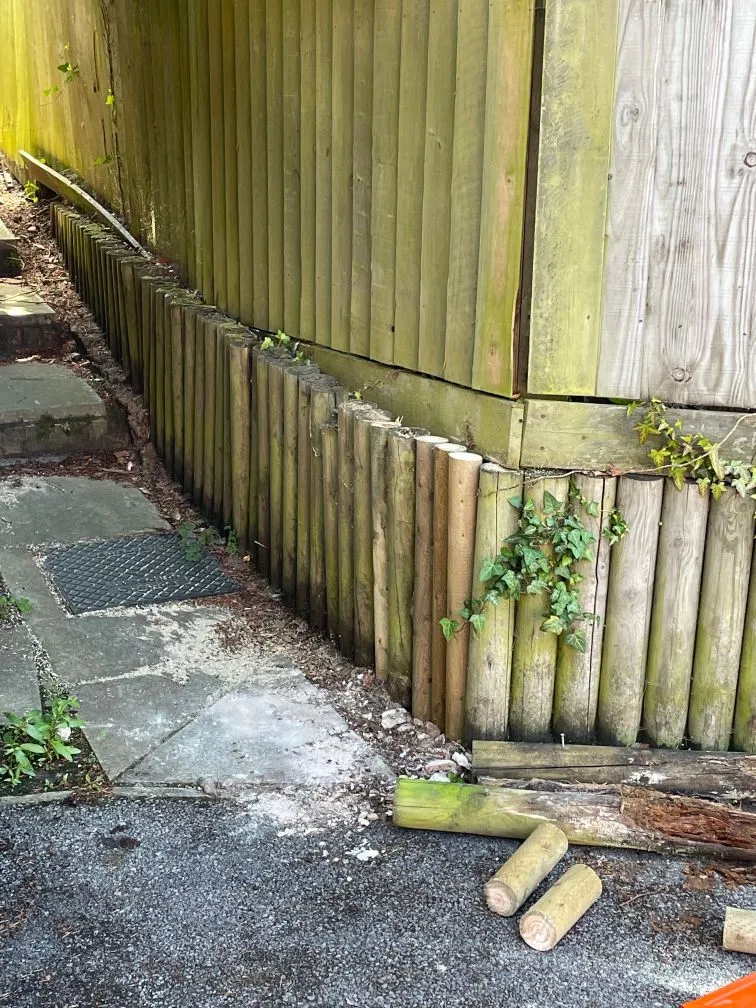
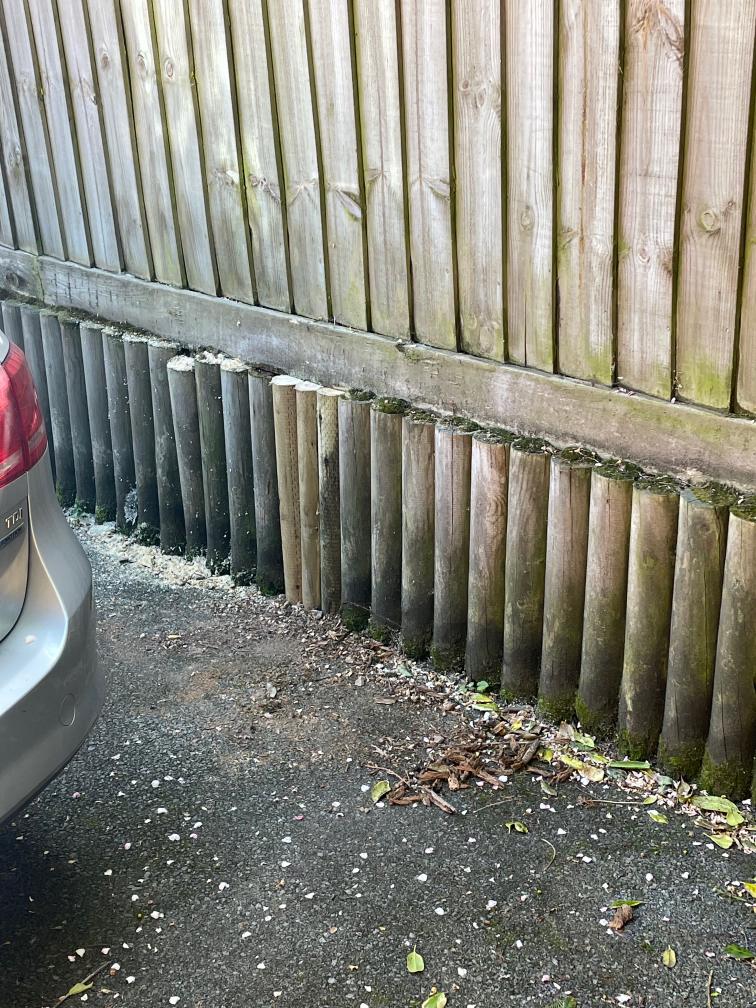
At a commercial site in Marsh Barton, a log palisade fence beside a car park had rotted through in places and the logs were falling out of line. We replaced the five worst logs where they had failed, so the rest of the fence could stay. Before on the left, after on the right.
What usually goes wrong
- Posts gone at the base. Timber stays wettest at soil level, so that’s where rot starts. A post can look sound above the soil and break just under it.
- Panels blown out or split. A solid run acts like a sail. If the posts hold but a panel goes, that panel can often be changed by itself.
- Loose or broken boards and rails. On a board fence, single boards and rails can usually be replaced without taking the run down.
- A gravel board that has rotted. Where there’s no board at the bottom, or the old one has gone, the panel or boards sit in the wet and rot from below.
- A leaning section. Lean usually means a post has moved, rotted or been pushed. The answer depends on which of those it is.
More fence repairs in Exeter
Every picture is from one of our own Exeter jobs.


When a tree is the reason
Branches and trees down in a storm
After a gale the first job is making the tree safe, and that comes before anyone straightens a post. A branch lying on a fence may still be under tension, and a tree that has dropped one limb may have others ready to follow. We clear the timber, look at what’s left in the crown, and then put the fence right. If an insurer is involved, get pictures of the damage while it’s still lying where it fell.
Roots lifting the line
A tree growing close to a fence will, over the years, push against posts and lift the ground they sit in. Simply digging a new hole in the same place can mean cutting through a large root, which weakens the tree and may not even hold the post. Usually it works out better to shift a post along a little, bridge over the root, or change the way that section is fixed. Where a tree really is too close and too big for the spot, we can talk through whether it should stay at all.
Hedges, ivy and climbers
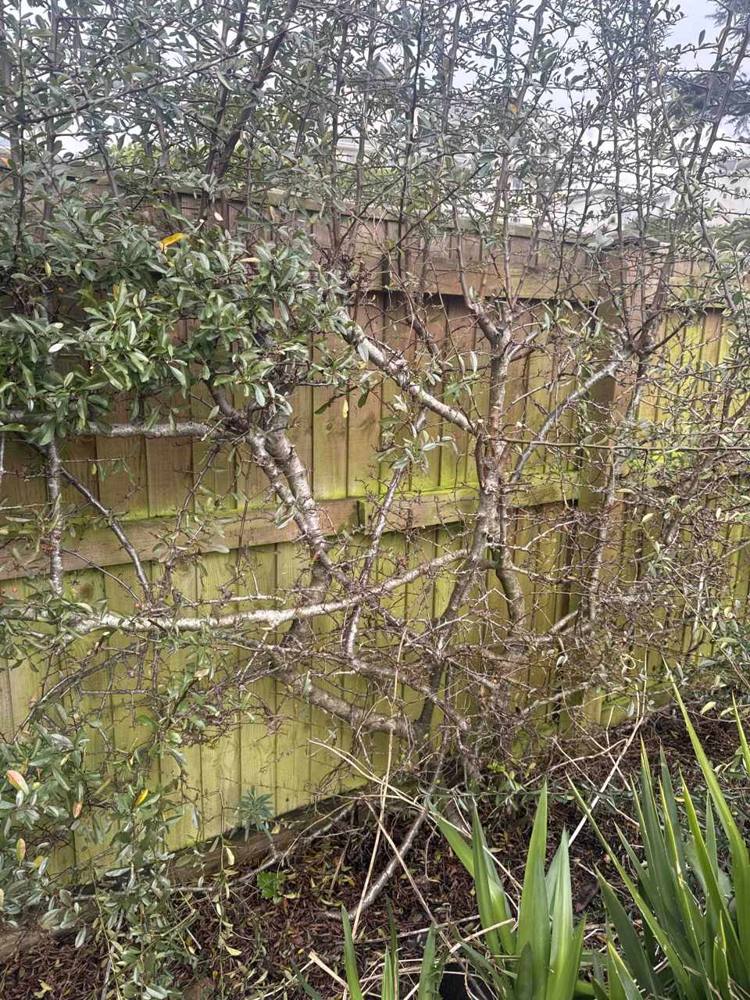
A hedge planted tight to a fence keeps getting wider, and before long it’s leaning on the panels. Ivy and other climbers add weight and hold the damp in, so timber under heavy growth rots faster and catches more wind. Cutting the growth back first shows what state the fence is really in, and it’s work we do anyway.
Protected trees near the fence
Where the tree is protected by an order, or grows inside a conservation area, cutting branches or roots generally needs the council’s say first, and that includes roots cut while digging post holes. National guidance does allow some work on dead or dangerous branches without consent, but notice still has to be given to the council, and only the work needed to remove the danger is covered. If the danger is immediate and serious, the notice can follow straight after, once the urgent work is done. We can check the council’s records before the job and, where an application is needed, help with it through our tree applications service.
Repair or replace?
We’ll tell you straight. A sound run with one or two failed posts is worth repairing. A fence where most posts have gone soft at ground level, or where every panel is grey and splitting, usually isn’t, because you’d be paying to repair a fence that will need the same again next winter. Somewhere in between, a section can be rebuilt and the rest left until it needs doing. What decides it is the posts. Push the top of each one: if it moves easily or the timber gives at ground level, it’s near its end.
Matching can be a nuisance. New timber is a different colour from old, panel sizes change between makers, and old concrete posts don’t always take modern panels. We’ll say if a repair will look patched, so the choice is yours before any work starts.
Ownership and planning
Before any work on a boundary, it’s worth being sure which side owns it. Deeds sometimes show it, but not always, and the post side of a fence isn’t a reliable guide on its own. If it’s shared, or you aren’t sure, talking to next door first saves a lot of trouble later.
Putting an existing fence back as it was is usually straightforward in planning terms. The national rules let you maintain, alter or replace a fence without applying, provided it keeps inside the height limits (two metres in most places, one metre where it fronts a road carrying traffic, or the pavement beside it) and you don’t raise one that’s already taller. Those rights don’t apply at a listed building or on a boundary shared with one, and they can also be taken away by an Article 4 direction, or by a condition on an earlier permission. Inside a conservation area, removing a fence can itself need consent, so check with the council first when in doubt.
How a repair visit runs
- You send us pictures and roughly how many metres or panels are affected.
- We come out, inspect the posts and whatever is growing alongside, and check for a protected tree where one is involved.
- Our quote sets out what will be repaired, what’s being replaced, and any tree or hedge work needed first.
- On the day, the tree or hedge side is done first, then the posts, then the panels or boards.
- Old timber and green waste go away with us unless you’d like any left.
Where we work in Exeter
We cover the whole city, including Pinhoe, Whipton, Heavitree, St Thomas, Exwick, Alphington, Pennsylvania and St James, plus Marsh Barton and the business parks, and the villages around the edge such as Kenton and Woodbury. In Pinhoe we swapped a broken post and added another where access was tight, taking all the old wood and concrete away. Gardens on the hills above the city catch the wind, and sloping plots move with the weather, so we take both into account when we plan a repair.
What affects the cost
We don’t list a figure, because a single post and a storm-flattened run are very different jobs. Number of posts and panels, the type of fence, how easy it is to reach, any tree or hedge work, roots in the way and taking away the old timber all play a part. If the repair turns into a replacement, the main choices are set out in our panel, featheredge and post comparison.
Common questions
Can a single post be changed without the panels coming down?
Often, yes. The panels either side are lifted out or supported while the old post comes out and the new one goes in. If the posts next to it are going the same way, we’ll say so.
A tree from next door has damaged my fence. What now?
Make sure nobody is at risk, take photos, and talk to your neighbour. We can make the fallen timber safe, but we won’t work on a tree that isn’t yours without the owner agreeing, and we don’t advise on who pays.
Should I cut the ivy off the fence?
Usually, but check for nesting birds first in spring and summer. Pulling thick ivy can bring a weak panel down with it, so it’s better cut at the base and taken off once it has died back.
Send us your photos
One picture of the whole run, another of the worst post where it enters the ground, and a picture of any tree, hedge or ivy beside it will help us see what’s going on. Our contact page takes photos.
More from DTG near you
All our fencing: Featheredge fencing · Panel fencing · Hit and miss fencing · Stock and field fencing · Fencing overview
Trees and hedges on the line: Tree surgeons in Exeter · Hedge trimming · Stump grinding
Near you in Exeter: Tree Surgeon Pinhoe and Whipton · Hedge Trimming Pinhoe and Whipton · Tree Surgeon Alphington · Emergency Tree Surgeon Exeter