Removing Protected Trees in Devon: When Can a TPO Tree Be Removed?
At first glance, many people assume that a tree protected by a Tree Preservation Order (TPO) can never be removed.
In reality, while TPOs provide important legal protection for significant trees, there are circumstances where removal is not only permitted but necessary. A recent project completed by the team at DTG Trees & Grounds is a good example of how protected trees can sometimes become unsafe and require professional intervention.
A Challenging Tree Removal Project
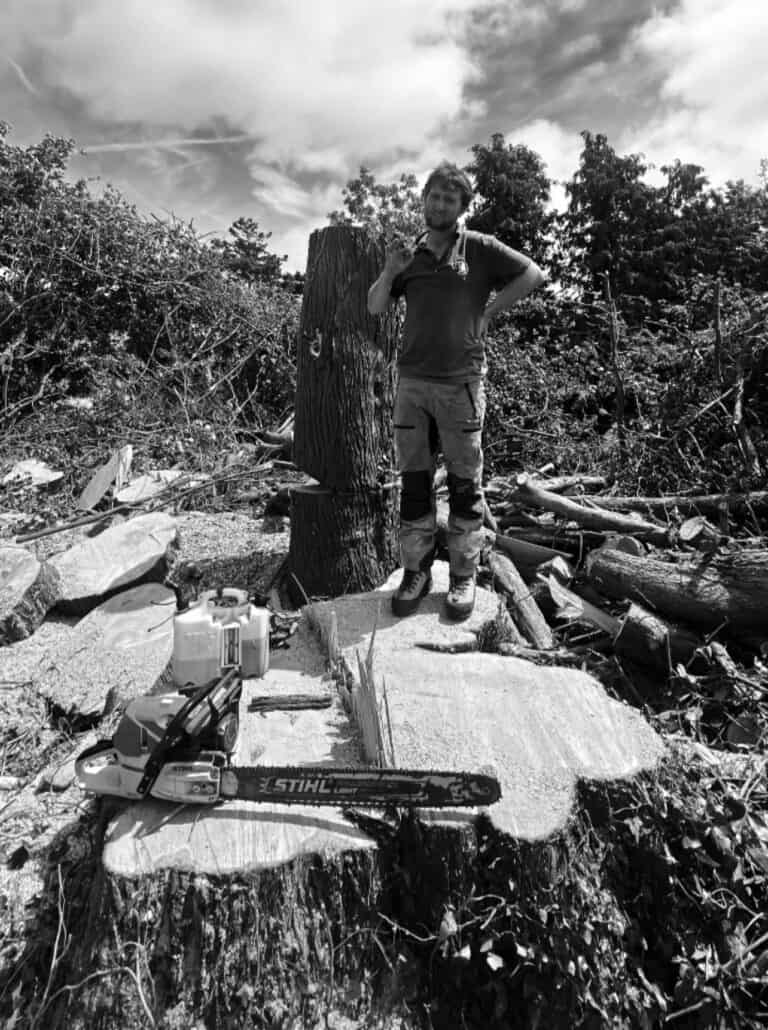
Recently, our Operations Manager, Joe Cox, and the team spent several days on site carrying out the careful dismantling of three dead Monterey Cypress (Macrocarpa) trees.
These weren’t ordinary tree removals. The trees were covered by a Tree Preservation Order, meaning any proposed works had to follow the correct procedures and receive the necessary approvals before work could begin.
Following assessment and inspection, permission was granted for the removal of the trees due to their condition and the risks associated with leaving them standing.
By the end of the project, the team were understandably tired, but equally proud to have completed another technically challenging job safely and professionally.
What Is a Tree Preservation Order?
A Tree Preservation Order, commonly known as a TPO, is a legal protection placed on individual trees, groups of trees or woodlands by a local planning authority.
The purpose of a TPO is to protect trees that provide significant public amenity value and prevent unnecessary pruning, damage or removal.
If a tree is protected, permission is normally required before carrying out:
- Tree removal
- Crown reductions
- Major pruning works
- Root disturbance
- Other operations that may affect the tree
Unauthorised work on a protected tree can lead to significant penalties, which is why it’s always important to check before any work begins.
Can Protected Trees Ever Be Removed?
The simple answer is yes.
A TPO does not mean a tree must remain standing forever. Trees are living organisms and their condition can change over time.
Common reasons permission may be granted include:
- The tree has died
- Significant structural defects have developed
- Disease has caused decline
- The tree presents an unacceptable safety risk
- Storm damage has made the tree unstable
In situations where safety becomes a concern, local authorities will often consider supporting evidence from qualified arborists before making a decision.
Every case is assessed individually based on the condition of the tree and the level of risk involved.
Why Professional Assessments Matter
One of the biggest misconceptions surrounding TPO trees is that visual appearance alone determines whether work is required.
In reality, tree condition assessments often involve much more detailed inspections. Decay, structural weaknesses and root-related issues are not always obvious from the ground.
Professional assessments help determine:
- Whether the tree remains viable
- The extent of any defects
- The likelihood of failure
- Whether management or removal is the most appropriate option
The aim is always to retain healthy trees wherever possible, while ensuring public safety remains the priority.
The Importance of Specialist Equipment and Experience
Removing large dead trees requires careful planning and the right equipment.
On this project, we were pleased to work alongside Ben from Tree Fellas Devon Ltd, whose experience, expertise and specialist machinery were invaluable throughout the operation.
Partnerships like these allow complex projects to be completed efficiently while maintaining the highest standards of safety.
When dealing with large, dead or protected trees, teamwork and preparation are every bit as important as technical skill.
Balancing Tree Protection and Public Safety
Tree Preservation Orders play an important role in protecting Devon’s landscape, but they are not designed to prevent sensible tree management.
The goal is to strike the right balance between preserving valuable trees and addressing genuine safety concerns when they arise.
This project demonstrates exactly that. Three protected trees had reached a point where removal was the safest and most responsible option. By following the correct process and obtaining permission before work commenced, the trees could be removed legally, safely and professionally.
Professional Tree Advice Across Devon
At DTG Trees & Grounds, we regularly assist homeowners, landowners, businesses and estate managers with tree inspections, surveys and applications relating to protected trees.
Whether you’re unsure if a tree is covered by a TPO, concerned about its condition or need professional advice before carrying out work, our team can help guide you through the process.
Every tree and every situation is different, which is why expert advice is always the best place to start.
Do you need help from our experts?
Give us a call today to get expert advice and support from our experienced team.